Gross motor skills form the foundation of a toddler’s physical development, encompassing the large muscle movements that enable walking, running, jumping, and climbing. These essential skills not only promote physical strength and coordination but also contribute to cognitive development, spatial awareness, and self-confidence. Selecting the right toys can significantly accelerate this developmental process while keeping your little one engaged and entertained.
Understanding Gross Motor Development in Toddlers
During the toddler years, children experience rapid growth in their ability to control large muscle groups. This period is crucial for developing balance, coordination, and strength. The right toys can provide structured opportunities for practice while making the learning process enjoyable and natural.
Quality gross motor toys encourage movement patterns that mirror real-world activities, helping toddlers build the physical foundation they’ll need for more complex movements later in life. These toys also promote problem-solving skills as children figure out how to navigate obstacles and challenges.
Climbing Structures
Climbing toys represent one of the most effective categories for developing gross motor skills. The Pikler Triangle climbing frame allows children to explore movement at their own pace, building confidence while developing upper body strength, coordination, and spatial awareness.
Other climbing toys like dome climbers, rock walls, and stepped climbing structures provide varied challenges that engage different muscle groups. These toys encourage problem-solving as toddlers determine the best routes and hand-foot coordination patterns. The repetitive nature of climbing movements helps strengthen core muscles and improves overall body awareness.
Indoor climbing structures are particularly valuable because they provide year-round opportunities for active play, regardless of weather conditions. Many modern climbing toys are designed with safety features while still offering appropriate challenges for developing motor skills.
Balance and Coordination Toys
Balance-focused toys help toddlers develop the core strength and proprioception necessary for confident movement. Wobble boards, balance beams, and stepping stones create opportunities for children to practice weight distribution and stability.
Rocking toys, including rocking horses and balance boards, engage the vestibular system while strengthening core muscles. These toys require constant micro-adjustments that improve balance and spatial orientation. The rhythmic motion also has calming effects that can help regulate sensory input.
Balance bikes represent an excellent investment for developing coordination and preparing children for traditional bicycles. These pedal-free bikes allow toddlers to focus on balance and steering without the complexity of pedaling, building confidence and gross motor skills simultaneously.
Active Play Equipment for Large Movement
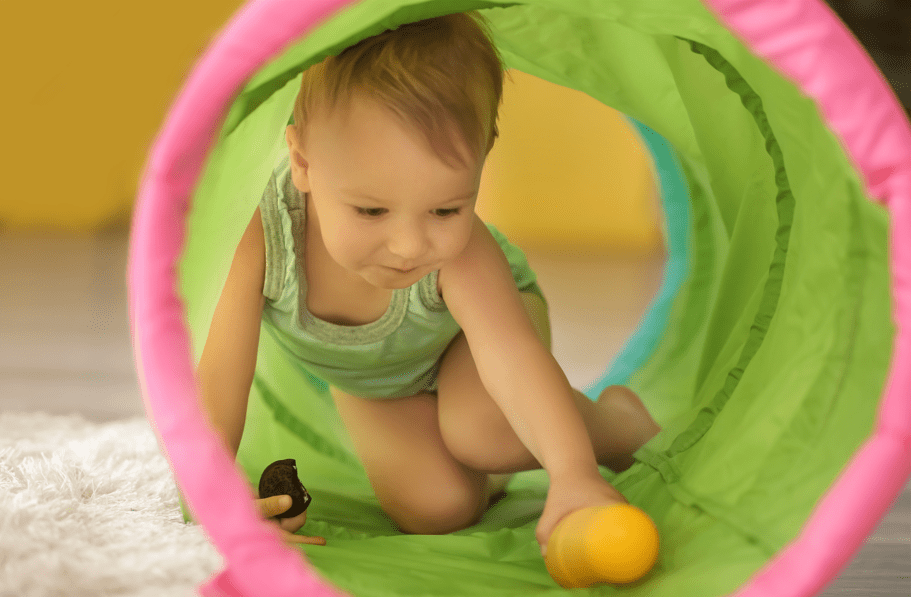
Larger play equipment designed for toddlers can transform any space into an active play environment. Tunnel systems encourage crawling and spatial navigation, while also providing opportunities for imaginative play. These toys help develop bilateral coordination as children move through confined spaces.
Slides appropriate for toddler use promote climbing, sliding, and the development of cause-and-effect understanding. The climbing portion strengthens legs and arms, while sliding teaches body control and spatial awareness.
Trampolines designed specifically for toddlers, often featuring safety handles, provide excellent opportunities for developing rhythm, balance, and leg strength. The bouncing motion helps develop proprioception and bilateral coordination while providing sensory input that many children find regulating.
Ride-On Toys
Ride-on toys engage multiple muscle groups while teaching steering and directional control. These toys range from simple push toys that support early walking to more complex riding toys that require coordination between steering and propulsion.
Wheeled toys like wagons and push carts encourage walking while providing support and motivation. They also introduce concepts of cause and effect as children learn how their movements affect the toy’s motion.
Scooters designed for toddlers help develop balance, coordination, and confidence in movement. The pushing motion strengthens legs while the steering requires upper body control and spatial awareness.
Creating an Effective Play Environment
The most beneficial approach involves rotating toys to maintain interest while ensuring a variety of movement opportunities. Combining different types of gross motor toys creates a comprehensive physical development program that addresses various aspects of movement and coordination.
Consider the available space and safety requirements when selecting toys. Indoor options like the Pikler Triangle and other climbing toys provide consistent opportunities for development, while outdoor equipment can offer different challenges and experiences.
Remember that the best gross motor toys grow with your child, offering increasing challenges as skills develop. Investment in quality, versatile toys pays dividends in long-term physical development and confidence building.

 Lovely Lavender
Leave a comment