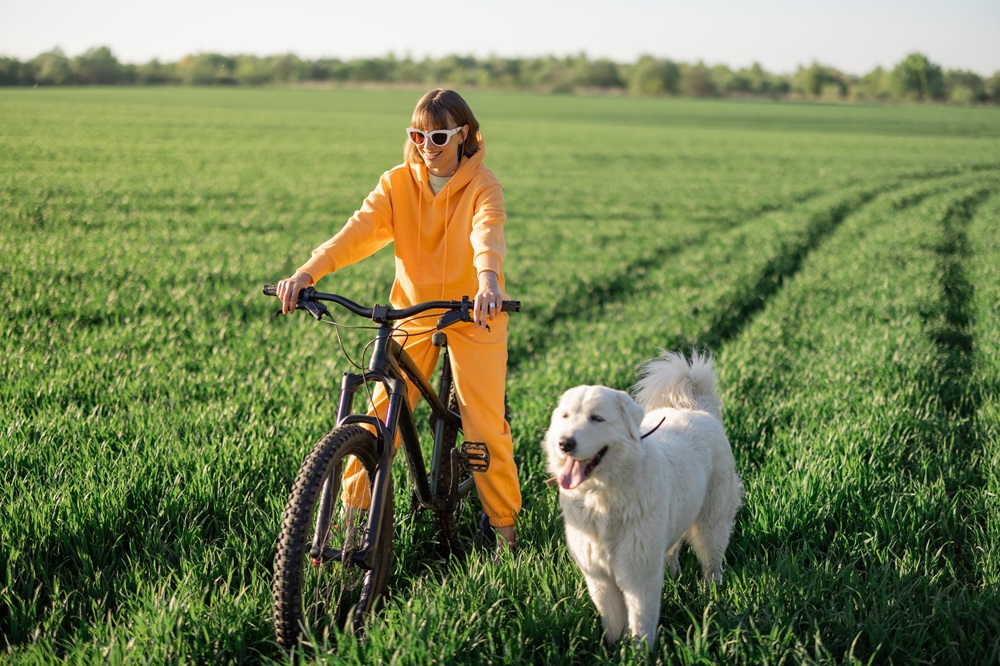
Exercising with your dog offers far more than just physical fitness—it strengthens your bond, provides mental stimulation for both of you, and creates joyful shared experiences. When you and your canine companion move together, you’re more likely to stay consistent with your fitness routine, motivated by those eager eyes and wagging tail. This mutual enrichment benefits your dog’s behavior and your own well-being. Whether you’re exploring trails, splashing in water, or playing in the backyard, there are countless ways to get active together. From walking and running to biking, hiking, swimming, agility training, and creative play, the options suit every fitness level, breed type, and lifestyle.
Walking
Daily walks form the cornerstone of canine health and good behavior. This simple activity benefits all ages and breeds, with pace and distance easily customized to your dog’s needs. A senior chihuahua and a young border collie both thrive on walks—just at different intensities.
Make walks more engaging by allowing sniff breaks, which provide crucial mental stimulation for your dog. Vary your routes to introduce new sights and smells, and seek out social encounters with other dogs when appropriate. Essential gear includes a properly fitted harness that doesn’t restrict movement, a sturdy leash, waste bags for responsible cleanup, and reflective accessories for visibility during early morning or evening outings.
Running
Running suits athletic breeds and dogs with natural stamina, like retrievers, shepherds, and sporting breeds. However, not every dog is built for distance running—brachycephalic breeds with flat faces struggle with sustained aerobic exercise.
Build endurance gradually, starting with run-walk intervals and slowly increasing distance over weeks. Watch for signs of overexertion like excessive panting, lagging behind, or limping. Protect paws from hot pavement, bring plenty of water for both of you, and avoid running during temperature extremes. Train your dog to respond to pace control cues and to start and stop safely at intersections.
Biking
Biking provides an excellent outlet for high-energy dogs that crave sustained movement. This activity requires specific gear: a specialized bike and dog leash (also called a bike tow leash) that attaches to your frame (never the handlebars), a padded harness that distributes pressure evenly, reflective gear for visibility, and portable water supplies.
Training is essential for safety. Begin by walking your dog alongside the stationary bike, then progress to slow rolling while they walk. Teach directional cues and gradually increase speed as they gain confidence. Choose dog-friendly paths with low traffic, preferably shaded routes to prevent overheating. Always prioritize your dog’s comfort over speed or distance goals.
Hiking
Hiking offers incredible bonding opportunities while exposing your dog to varied terrain and natural stimulation. It’s ideal for dogs with good recall and trail manners, though leash requirements vary by location—always check regulations before heading out.
Pack essentials including ample water for both of you, high-energy snacks, paw balm to protect foot pads, and a basic first aid kit. Practice trail etiquette by yielding to other hikers, keeping your dog close when passing, and being aware of wildlife. Teaching a reliable “leave it” command proves invaluable on trails.
Swimming
Swimming provides excellent low-impact exercise, particularly beneficial for dogs with joint issues, arthritis, or heat sensitivity. The water supports their body weight while building strength and endurance.
Safety comes first: invest in a canine life vest, especially for new swimmers or dogs with short legs. Choose clean water sources and always supervise closely. Options include dog-friendly lakes, designated dog beaches, or canine hydrotherapy centers with controlled environments. After swimming, dry your dog thoroughly and clean their ears to prevent infections.
Agility and Obstacle Training
Agility training builds coordination, confidence, and mental focus through navigating tunnels, jumps, weave poles, and other obstacles. You can create simple backyard setups using household items or join formal classes with professional equipment.
Use positive reinforcement and progress gradually, ensuring obstacles are appropriately scaled for your dog’s size and ability. This activity suits all breeds when properly adapted—even small or senior dogs enjoy modified courses. The mental challenge often tires dogs as much as the physical exertion.
Play-Based Movement and Games
Don’t underestimate the fitness value of classic games. Fetch provides excellent cardio, tug-of-war builds strength, and chase games encourage speed and agility. These activities also deepen your bond through interactive play.
For rainy days, adapt activities indoors with hallway fetch, stair climbs (for healthy adult dogs), or movement-based puzzle toys. The mental stimulation of working for treats or toys complements physical exercise. Monitor intensity to avoid overstimulation, and end play sessions while your dog still wants more.
Staying active with your dog doesn’t require elaborate plans or expensive equipment—it simply requires commitment and creativity. From foundational daily walks to adventurous hikes and playful backyard games, you have diverse options to suit your lifestyle and your dog’s abilities. Start small, stay consistent, and remember that the journey matters more than the destination. Your dog doesn’t care if you hike five miles or just explore a new neighborhood block—they simply cherish the time spent moving with you. Choose one new activity this week and explore it together. Your health, your dog’s happiness, and your bond will all benefit from the adventure.


 Lovely Lavender
Leave a comment